How Luxury Wellness Spaces Drive Revenue Through Experience Architecture
Great design drives revenue. Learn how Experience Architecture optimizes flow across gyms, pools, and spas to boost member retention and operational efficiency.
Daryn Berriman
1/15/20264 min read
In luxury hospitality and residential development, there is a fundamental difference between "Interior Design" and "Experience Architecture."
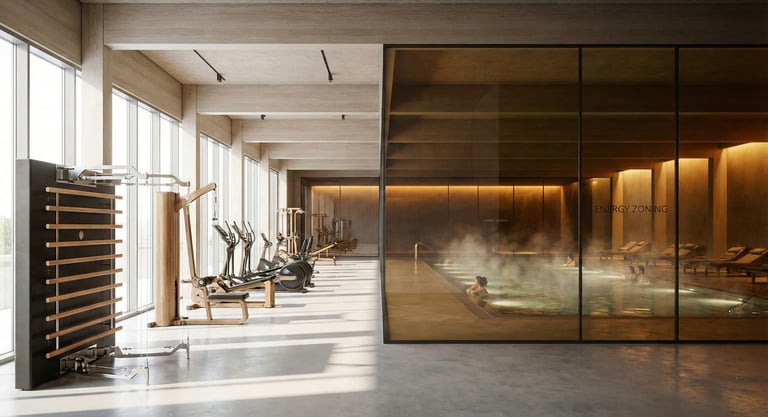
Interior design makes a space look beautiful. It chooses the fabrics, the lighting fixtures, and the color palette. Experience Architecture determines how the holistic facility performs. It dictates how a guest moves from a high-energy HIIT class to a recovery pool without breaking their state of flow. It dictates how staff manage a gym floor versus a quiet treatment corridor.
At Luxe Wellness Spaces, we see many ambitious projects that fail financially because they treat fitness, spa, and leisure as separate silos. A gym placed next to a meditation room with poor acoustic isolation is a liability. A pool area with no clear path to the changing village creates wet/dry cross-flow issues that increase cleaning costs.
To maximize Asset Value, developers must view the entire wellness ecosystem as one machine. Here is how we use Experience Architecture to turn complex floor plans into revenue engines.
1. The "Invisible Service" Flow (Lowering OpEx)
The biggest cost in any large-scale wellness asset (spanning fitness, pool, and spa) is labor. Poor design forces operators to over-staff just to manage the sprawling footprint.
If your towel drop-off points are poorly located between the gym and the wet areas, attendants spend 20% of their shift just walking. If the pool plant room is accessible only through a guest corridor, maintenance becomes a disruptive event.
The Fix: We design for Operational Efficiency across the Ecosystem. We map "Back of House" routes that connect the gym, pool deck, and treatment zones invisibly.
The Result: Dirty towels vanish, equipment is reset, and amenities are restocked without guests ever seeing a cart or a bin. This allows you to run a leaner team while maintaining a 5-star standard.
2. Zoning for Energy (The Acoustic Architecture)
The modern wellness consumer wants it all: the adrenaline of a functional fitness class and the silence of a recovery lounge. The challenge is that these two things are enemies.
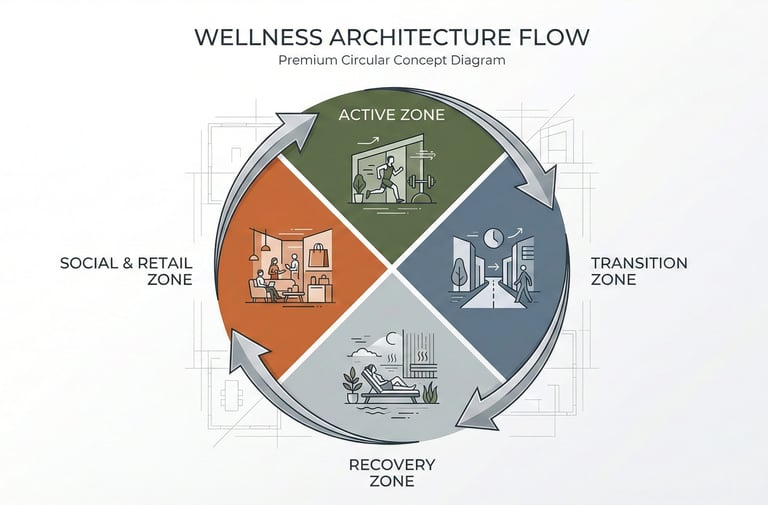
The Fix: Psychological & Acoustic Zoning. Experience Architecture is about managing "Energy Bleed."
High-Octane Zones: The gym and performance studios are positioned for high visibility, natural light, and social energy.
Transition Zones: The "airlocks" (changing villages, thermal hallways) that mentally prepare the guest to slow down.
Deep Quiet Zones: Treatment rooms and sleep pods are acoustically isolated. By physically engineering these separations, you protect the "Quiet Luxury" of the recovery space while allowing the fitness space to be vibrant. This dual capability allows you to capture a wider demographic of users.
3. Retail Beyond the Shelf
In many facilities, retail is limited to a few shelves of face cream in the lobby. This ignores the massive spending power of the fitness user.
The Fix: Integrated Retail Touchpoints. We embed retail opportunities throughout the entire journey, not just at the exit.
The Fitness Floor: Display foam rollers, resistance bands, or supplements near the stretching area (where users actually feel the need for them).
The Wet Area: Premium swimwear or goggles showcased near the pool access points.
The Result: Retail becomes a solution to a need in the moment, driving conversion rates far higher than a static shop front.
4. The "Hub & Spoke" Thermal Journey
A common bottleneck in large resorts is the "waiting game"—guests lingering in corridors because they don't know where to go between a swim and a massage.
The Fix: The Thermal Hub. We design the hydrotherapy and thermal suites (saunas, steam, vitality pools) as the central "Hub." It acts as a traffic control valve. It absorbs volume from the gym (post-workout recovery) and holds guests preparing for treatments. It keeps guests occupied and relaxed, freeing up staff and preventing congestion in hallways.
5. Future-Proofing: The Flexible Studio
Wellness trends move fast. The spin cycle craze of yesterday is the breathwork studio of today. Assets that are rigidly built for one specific modality (e.g., a tiered spin amphitheater) risk becoming "dead space" when trends shift.
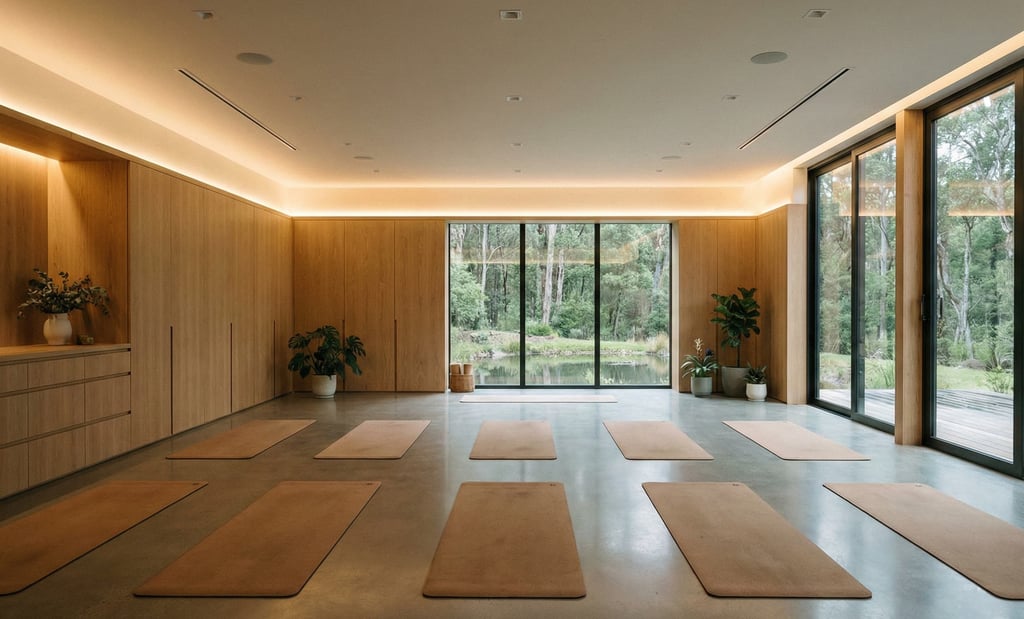
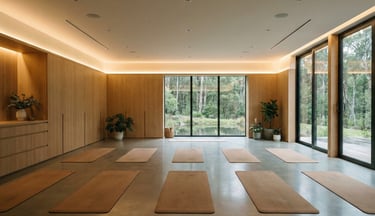
The Fix: Modular Infrastructure. We design movement studios with flexible lighting grids, concealed storage for varied equipment, and adaptable acoustics. A room that hosts a high-energy cardio class at 8:00 AM should be able to transform into a moody, sound-proofed sound bath venue by 6:00 PM. This maximizes RevPAM (Revenue Per Available Meter) by ensuring spaces are monetized 14 hours a day.
FAQ's
Q: What is experience architecture in wellness design?
A: Experience Architecture goes beyond interior design to engineer the functionality of a space. It focuses on optimizing the flow between fitness, hydrotherapy, and recovery zones to ensure the facility performs financially while delivering a seamless guest journey.
Q: How do you design a combined gym and spa facility?
A: The key is "Acoustic and Energetic Zoning." Active areas (gyms) must be physically and acoustically separated from passive areas (treatment rooms) using transition zones like changing villages or thermal suites to manage the guest's mental state and prevent noise bleed.
Q: Why is flexibility important in wellness studio design?
A: Wellness trends change rapidly. Designing flexible, modular studios allows operators to pivot programming (e.g., from HIIT to Meditation) without expensive renovations. This ensures the space remains utilized and revenue-generating throughout the entire day.
Does Your Design Perform?
A blueprint is a business plan. Ensure yours is written for profit across the entire facility.
Contact Luxe Wellness Spaces for a Design Review: Read Case Studies on Operational Efficiency
Further reading on our blog: 'How Expert Consultancy Improves Spa Business Performance.'
You may also enjoy: 'Strategic Investment for Wellness'
About The Author
Daryn Berriman is the Founder and Principal Consultant of Luxe Wellness Spaces, a consulting-led studio blending operational expertise and design excellence to create wellness businesses that perform, and spaces that guests love.